
Timeless Danish Design: The Finn Juhl House
In 1940, long before “mid-century modern” became global design language, Danish architect and furniture designer Finn Juhl built a home that quietly revolutionized how we think about modern living. Tucked into the tree-lined suburb of Ordrup, just north of Copenhagen, the Finn Juhl House is a living manifesto for Danish modernism and organic design. I was fortunate to fit in a visit to his house while in Copenhagen for the 3 Days of Design fair this summer, and it ended up being the highlight of my trip.
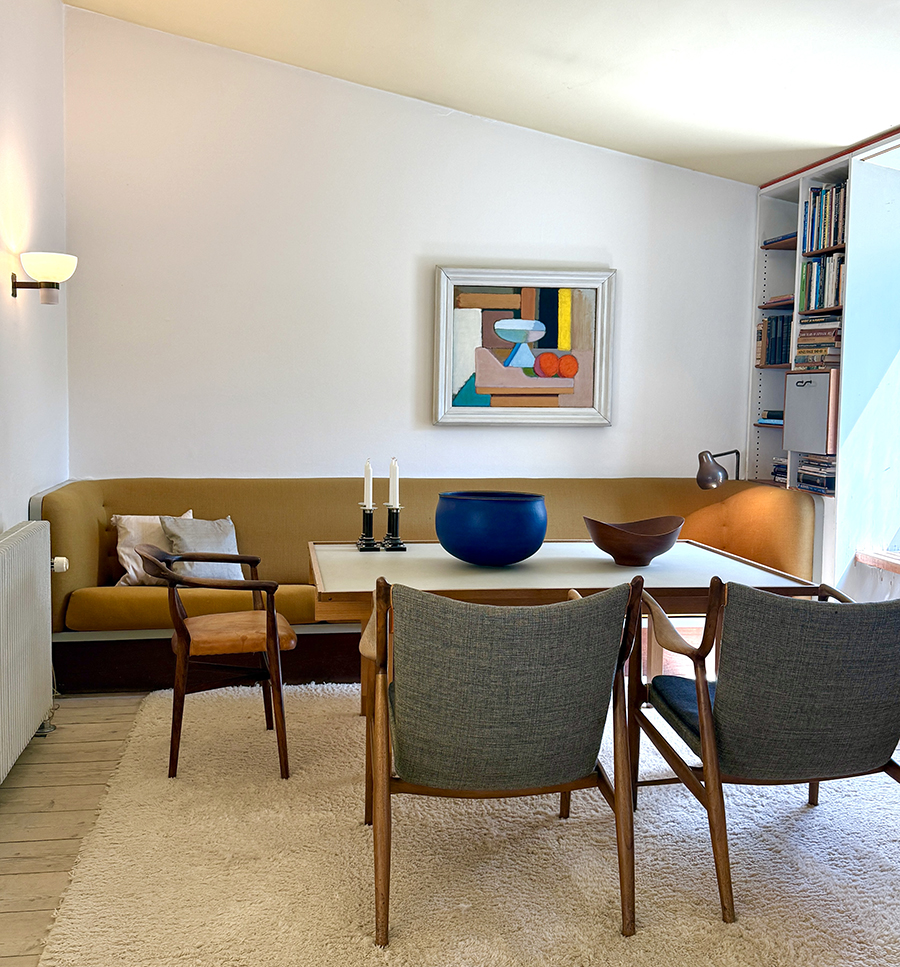
What makes the Finn Juhl House so extraordinary is how ahead of its time it was. Built when functionalist architecture dominated Europe—favoring stark lines and minimal expression—Juhl took a more poetic and humanistic approach. The house, part of the collection at Ordrupgaard Museum today, blends clean modern lines with warmth, natural materials, and his signature furniture pieces with sculptural lines.
Unlike his contemporaries, Juhl wasn’t interested in industrial coldness. His house embraces asymmetry, flowing movement, and personal comfort. The interiors are carefully zoned but never closed off. Rooms open fluidly into one another, with windows placed strategically to create a dialogue between indoors and nature—a principle that resonates strongly with today’s biophilic design movement.
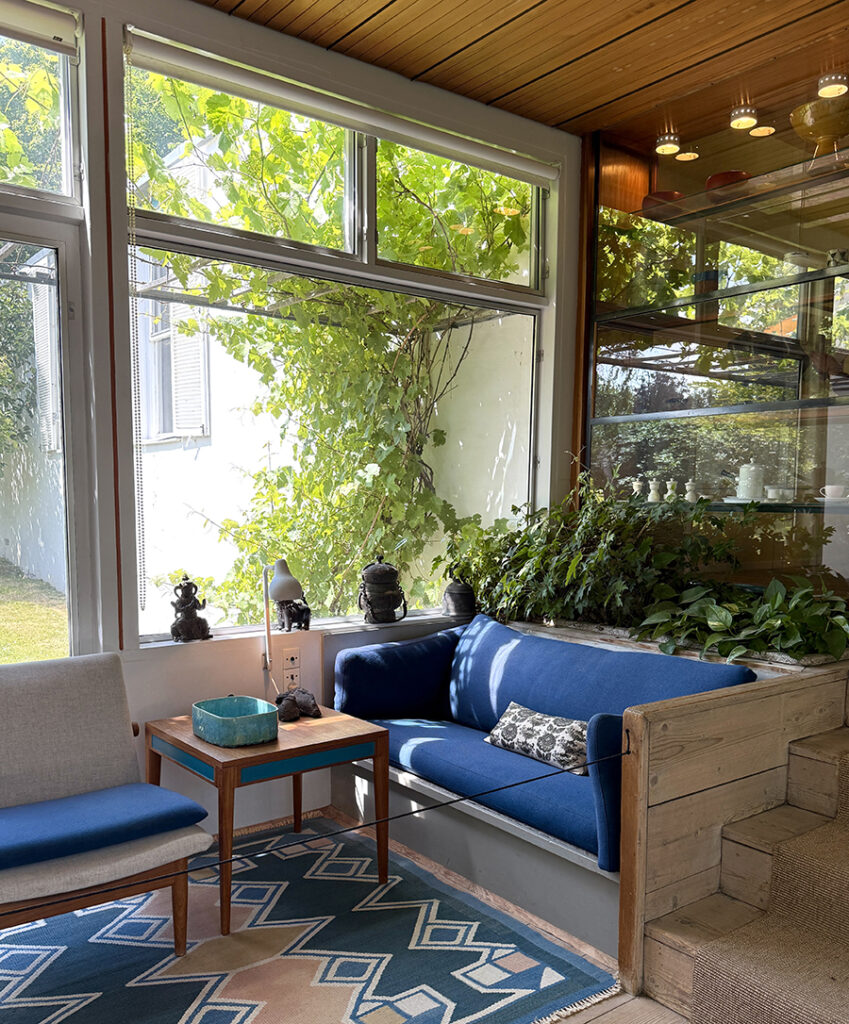
Stepping into the home feels like entering the original showroom for Juhl’s now-iconic mid-century furniture designs. Pieces like the Pelican Chair (1940), Chieftain Chair (1949), and Poet Sofa (1941) appear throughout the house—not as showpieces, but as fully integrated components of the architecture.
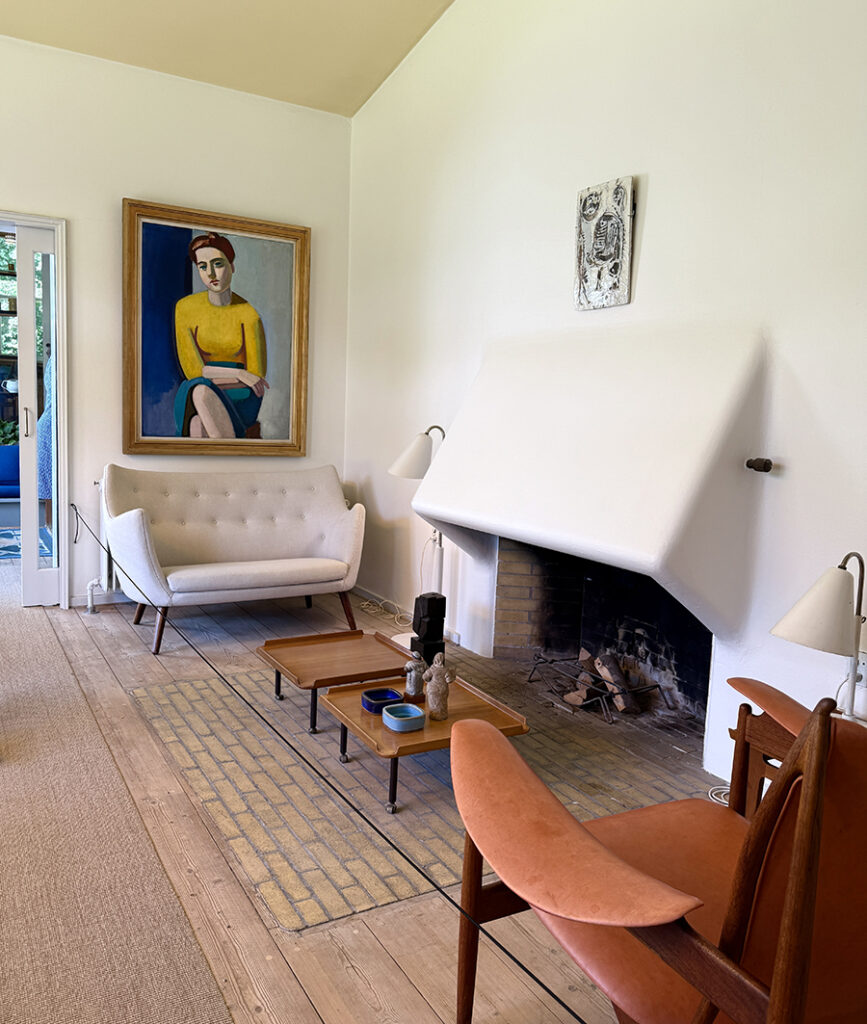
His furniture was sculptural, organic, and expressive—a radical departure from the geometric rigidity of the Bauhaus. Juhl worked primarily in teak and walnut, favoring hand craftsmanship and curved lines that echoed the human form. He once said, “One cannot create happiness with beautiful objects, but one can ruin quite a lot of happiness with bad ones.” In his home, every chair, table, and cabinet is designed not just to be admired, but to be lived with. There are objects from his collections throughout the home, from statues to ceramic bowls and vases.
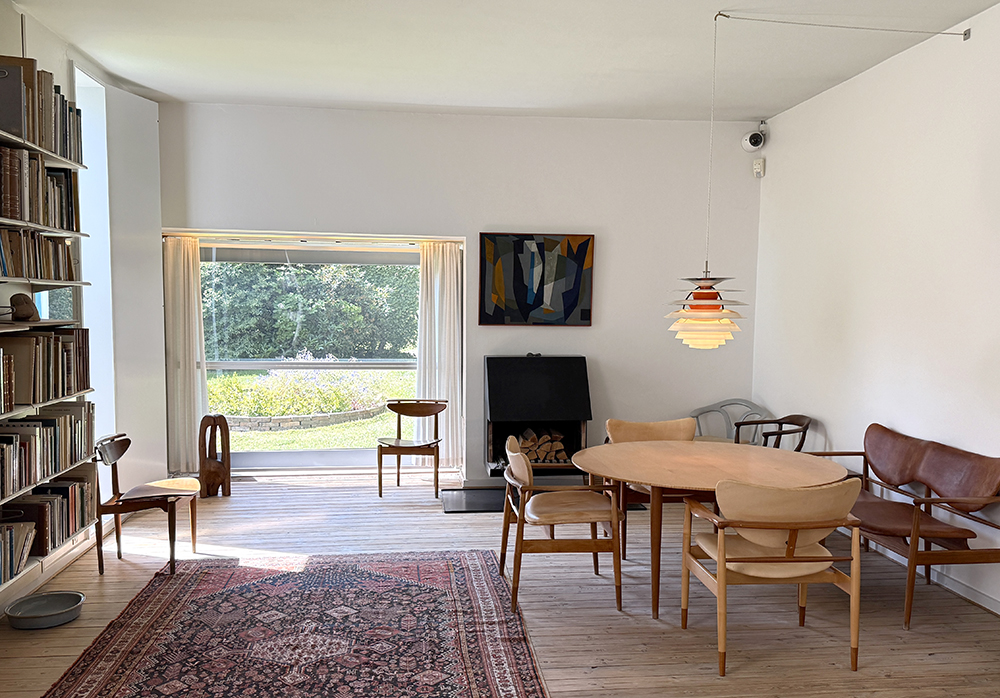
More than 80 years later, the Finn Juhl House feels startlingly contemporary. Many of the ideas Juhl pioneered—open-plan living, fluid sightlines, natural materials, warm minimalism, and art-integrated interiors—are foundational to how we design homes today. His emphasis on craftsmanship, comfort, and individuality over strict modernist rules resonates deeply in an era that prizes authentic, timeless design.
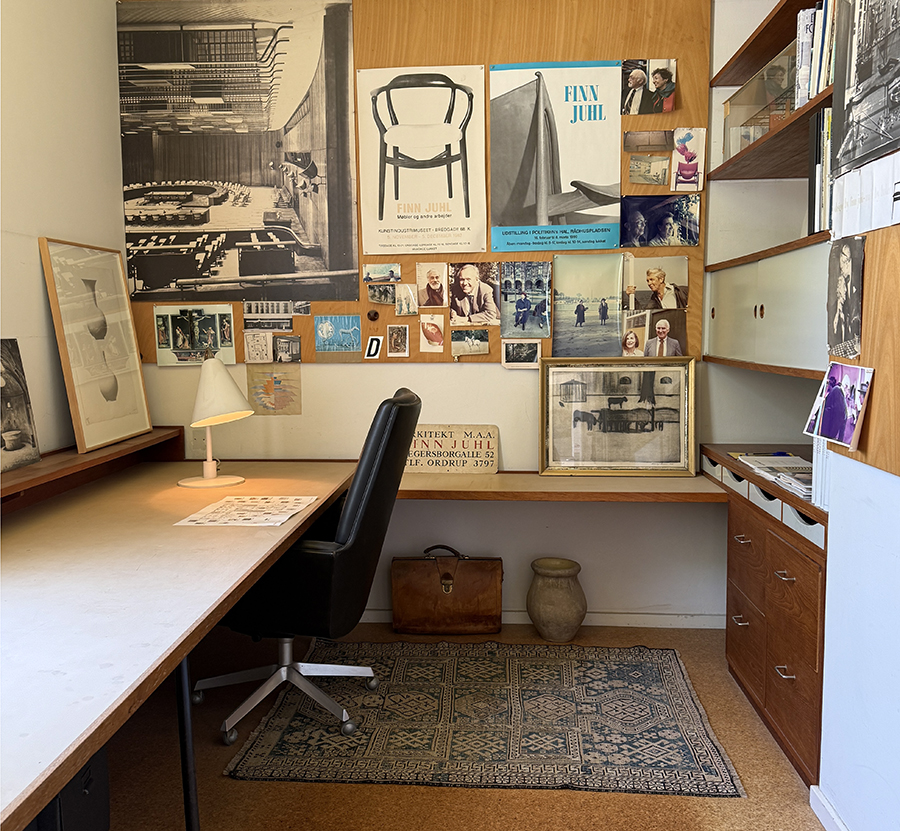
Interior design lovers, furniture designers and architects would all appreciate a visit to Finn Juhl’s House – it offers a rare, immersive glimpse into the mind of one of the most influential figures in modern design. Unlike museum displays or restored showrooms, the house is an authentic, lived-in canvas—a space that Finn Juhl designed entirely himself, from architecture to furnishings, down to the lighting and art placement. I could have spent hours studying every detail, but we headed to the renowned Louisiana Museum after this visit..stay tuned for highlights!