
Why Designers Flock to the Louisiana Museum
When we told fellow interior designers and architects about our upcoming trip to Copenhagen for the 3 Days of Design festival, almost every single one exclaimed that we simply HAD to make the trip outside the city to the Louisiana Museum. I couldn’t be more grateful for the hype, because it was completely warranted.
Tucked along the coast of Humlebæk, Denmark, just 35 minutes north of Copenhagen, the Louisiana Museum of Modern Art is far more than a museum—it’s a living case study in how art, architecture, and landscape can converge to create an immersive experience. For lovers of design and interior architecture, Louisiana is essential viewing: a timeless institution that seamlessly merges Danish modernism with a reverence for nature, light, and space.

Copenhagen’s Louisiana Museum: Destination for Interior Designers + Modern Art Lovers
The story of Louisiana begins in the mid-20th century with Knud W. Jensen, a Danish businessman and visionary who saw in a 19th-century seaside villa the perfect canvas for a modern art museum. The villa, originally named “Louisiana” after the three wives of its first owner (all named Louise), became the foundation for something revolutionary. In 1958, Jensen enlisted architects Jørgen Bo and Vilhelm Wohlert, who would go on to shape not just a building, but a philosophy of museum architecture.
Rather than constructing a monumental institution, the pair designed a series of low-slung pavilions—each blending into the landscape and connected by glass corridors that invite the outdoors in. The architecture is modest yet deeply elegant, emphasizing horizontality, warm wood detailing, and red-tiled floors that root the space in its Danish context while creating a serene backdrop for the art it houses.

The museum’s permanent collection includes over 4,000 works of modern and contemporary art, with particular strengths in post-World War II painting and sculpture. International icons such as Pablo Picasso, Andy Warhol, Roy Lichtenstein, and Louise Bourgeois are represented alongside significant Danish artists like Asger Jorn and members of the avant-garde CoBrA movement. What makes Louisiana exceptional is not only the breadth of its holdings, but how thoughtfully the works are presented. Pieces are never crowded, and exhibitions unfold in a rhythm that mirrors the architecture: deliberate, calm, and immersive.
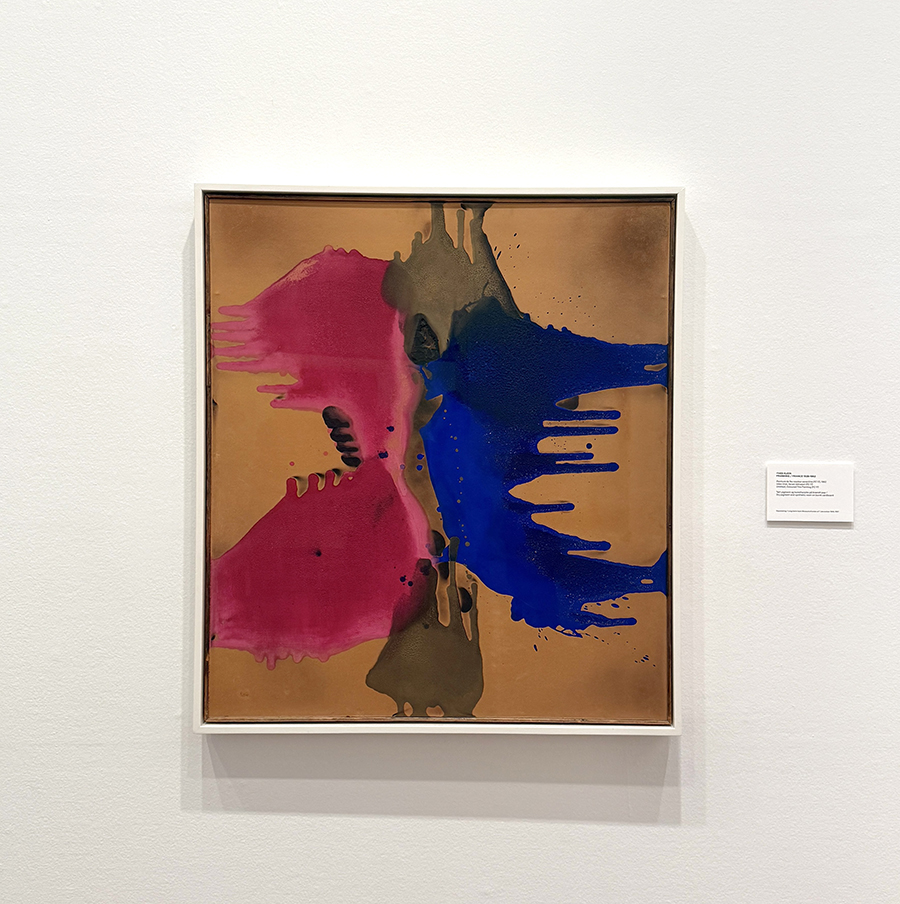
I was drawn to Fire Color – FC 17 (1962) by Yves Klein – a hauntingly beautiful testament to the French artist’s radical exploration of immateriality, energy, and elemental force. Created during the final year of his life, the piece belongs to his iconic “fire paintings” series, where he used actual flames and chemical reactions to scorch and mark paper, allowing fire itself to become the painter. Klein, a leading figure in postwar European art, is best known for his signature ultramarine pigment, International Klein Blue (IKB), and for pushing the boundaries of painting and sculpture through the use of unorthodox materials.
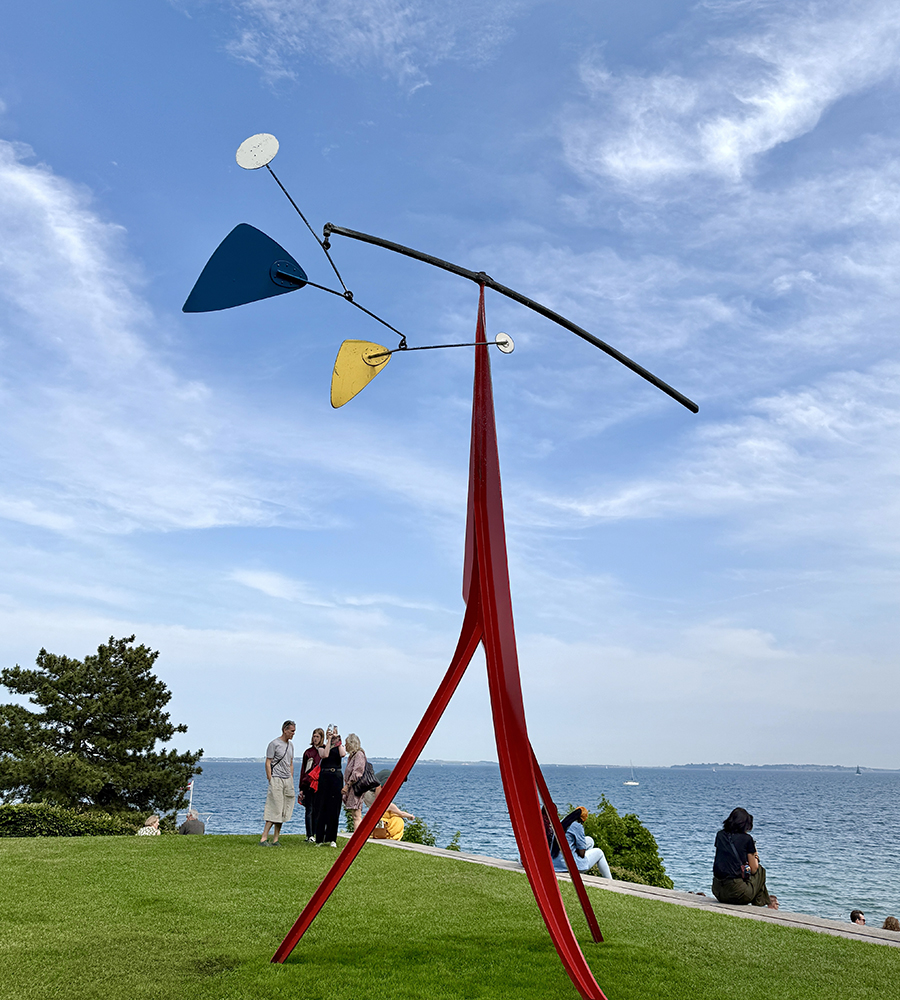
Equally compelling as the architecture and the interior collection is Louisiana’s sculpture park, one of the most beautifully integrated in the world. Works by artists such as Alexander Calder, Henry Moore, Jean Arp, Isamu Noguchi and Richard Serra dot the landscape, positioned not just for visibility, but for conversation with the terrain. These outdoor sculptures are not afterthoughts—they are central to the museum’s mission to break down the boundaries between art, nature, and the individual. The powerful red of the Calder stabile contrasts strikingly with the museum’s verdant coastal backdrop, infusing the space with gentle movement and playfulness.
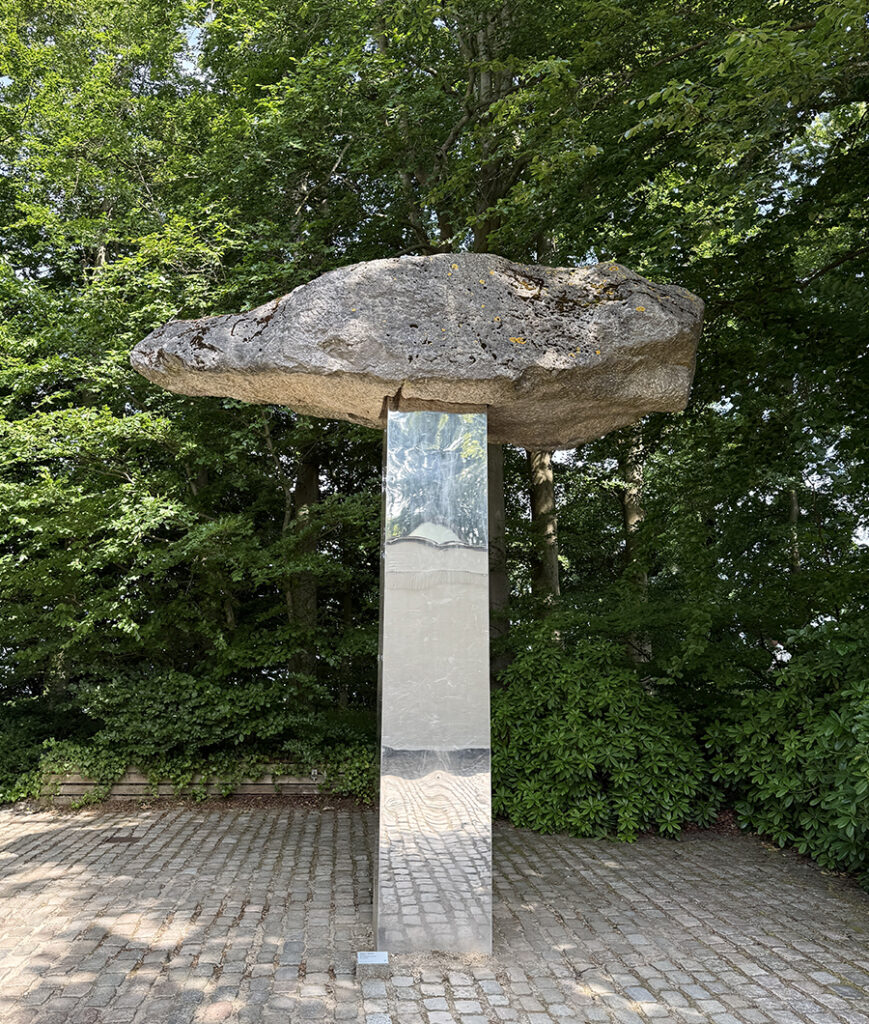
One of the most striking works in the sculpture park is Phase of Nothingness by Japanese artist Nobuo Sekine, a founding figure of the Mono-ha movement. It is a striking example of his exploration into the interplay between natural and industrial materials. This monumental sculpture features a large natural stone delicately balanced atop a polished stainless steel column.
The reflective surface of the column captures the surrounding environment, creating a dynamic interaction between the artwork and its setting. Sekine’s work challenges viewers to reconsider the relationships between objects, space, and perception, inviting contemplation on the transient nature of existence and the unseen forces that shape our world.

Alberto Giacometti, one of the most influential sculptors of the 20th century, is renowned for his hauntingly elongated bronze figures. Working primarily in plaster and bronze, Giacometti developed a visual language that conveyed the fragility, isolation, and resilience of the human spirit, particularly in the wake of World War II. His thin, attenuated forms—often solitary figures or sparse groupings—evoke a sense of distance and introspection. The rough, textured surfaces of his sculptures reflect his relentless reworking of material, a physical manifestation of his search for truth in form.