
Grundtvig’s Church: A Landmark of Danish Modern Design
In the quiet Bispebjerg district of Copenhagen stands one of Denmark’s most iconic architectural landmarks: Grundtvig’s Church. Completed in 1940, this monumental building merges Gothic influence with Nordic modernism, offering a timeless lesson in material simplicity, spatial rhythm, and design integrity. Originally designed by architect Peder Vilhelm Jensen-Klint and completed by his son, the renowned furniture designer Kaare Klint, the church is a must-see for interior designers drawn to spaces where architecture, light, and craftsmanship intersect. We were able to fit in a quick visit during our trip to Copenhagen’s 3 Days of Design last year and I’m still inspired by the photos.
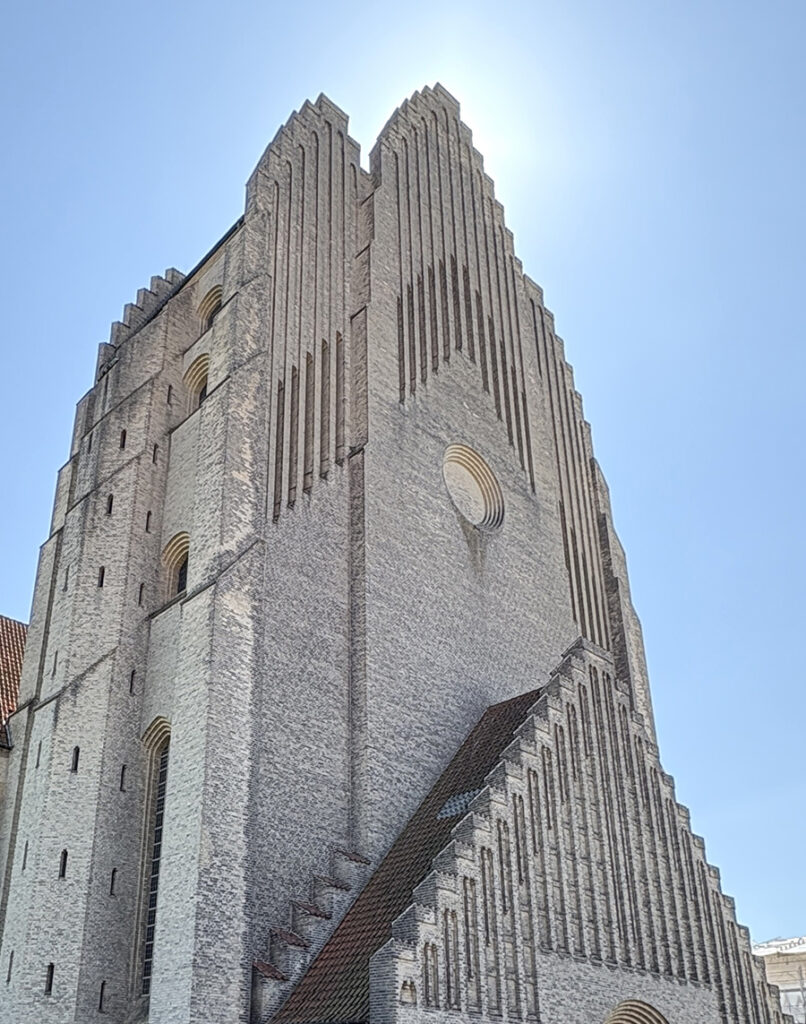
The architecture and exterior design of Grundtvig’s Church are as striking as its interior—monumental, sculptural, and deeply rooted in Danish tradition. The church is a rare example of expressionist church architecture, fusing Gothic verticality with the clean lines of Nordic minimalism. Its most iconic feature is the west façade: a massive, stepped gable that resembles a church organ or a mountain, giving the structure a powerful silhouette against the sky. The entire building is constructed from uniform yellow brick, a nod to traditional Danish craftsmanship, yet the scale and rhythm of the brickwork create a distinctly modern feel.
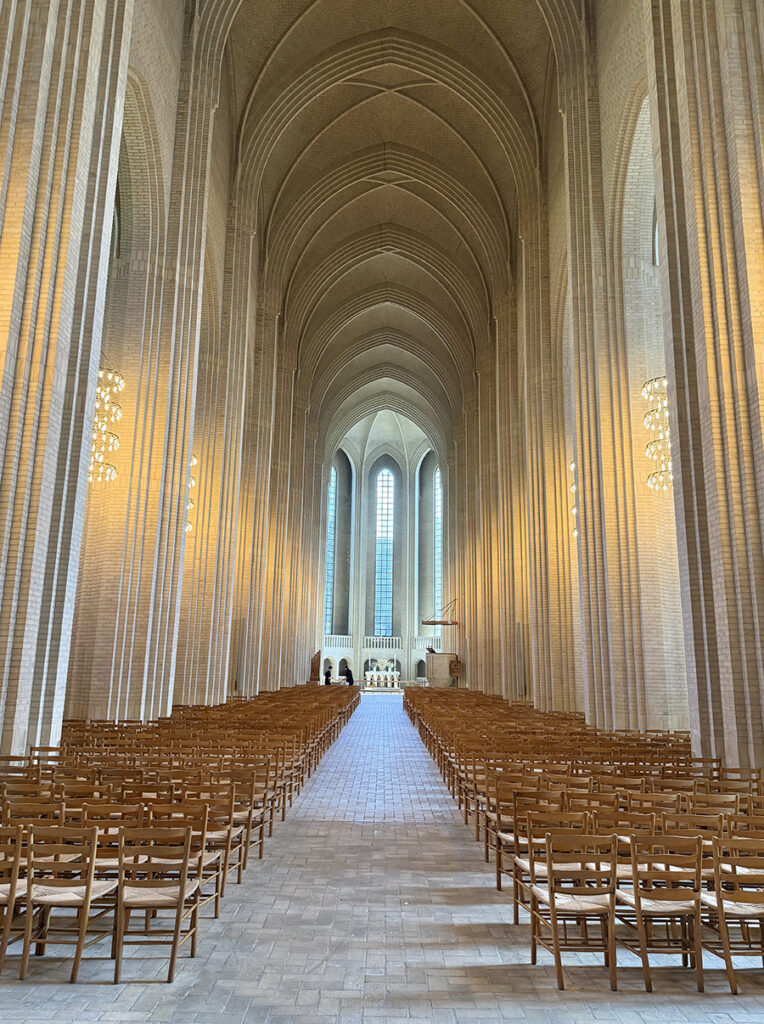
Built from nearly six million hand-laid yellow bricks, Grundtvig’s Church is a masterclass in monochromatic materiality. The long nave, with its soaring vaults and fluted columns, evokes the grandeur of Gothic cathedrals but strips away ornamentation in favor of pure form and function. Natural light streams through tall, slender windows, highlighting the textures and patterns of the brickwork. The result is serene and monumental—an interior that feels sacred without relying on religious iconography.
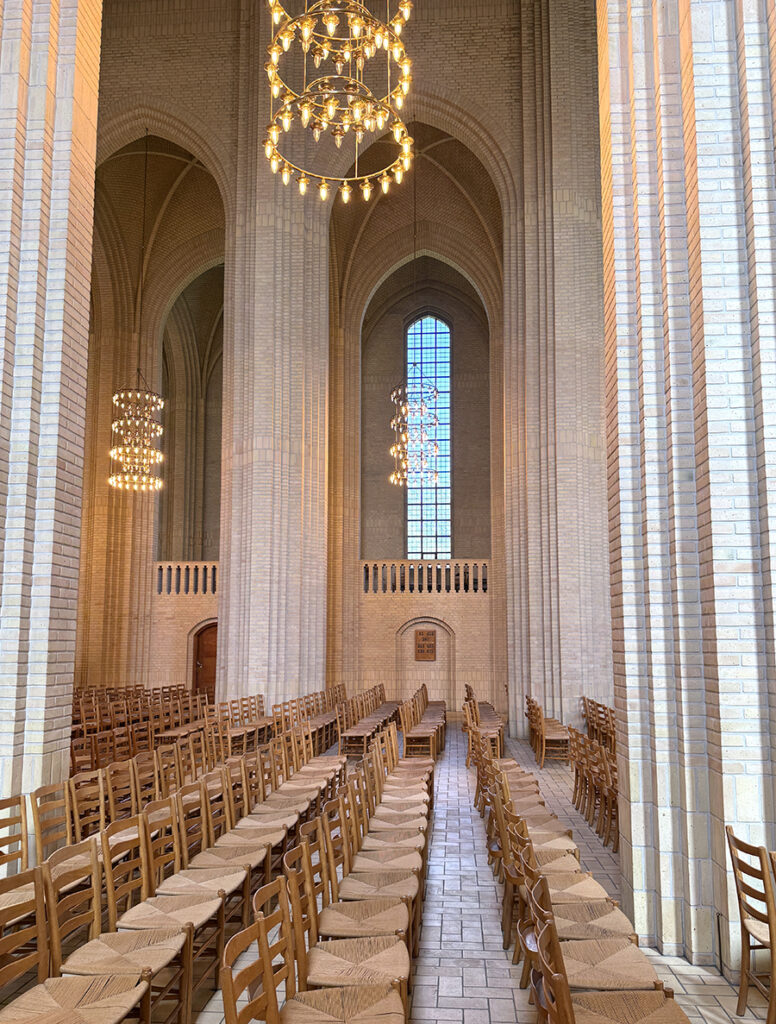
Kaare Klint, who carried his father’s vision through to completion, brought a refined modernist eye to the project. Widely regarded as the father of Danish design, Klint was not only an architect but a master furniture maker and teacher. The interior of Grundtvig’s Church is a triumph of restrained elegance, shaped as much by its architectural form as by his vision. Klint, a pivotal figure in Danish modernism, brought a deep sensitivity to proportion, scale, and material that defines the church’s serene atmosphere. He designed not just the lighting and furnishings, but also the custom oak chairs—now considered icons of Danish modern design—which reflect his philosophy of function-driven beauty.
The furnishings echo the architecture’s vertical rhythm, aligning seamlessly with the towering brick columns and groin vaults. Every element inside the church feels purposeful and harmonious, reinforcing Klint’s belief that good design should serve both the space and the human experience within it. His work at Grundtvig’s laid the foundation for modern Danish interior design, marrying craftsmanship with clarity in one of the most spiritually resonant spaces of the 20th century. For today’s interior designers—especially those focused on natural materials and modern design —Grundtvig’s Church offers lasting inspiration. It demonstrates how limited palettes and honest materials, when used with precision, can elevate a space.